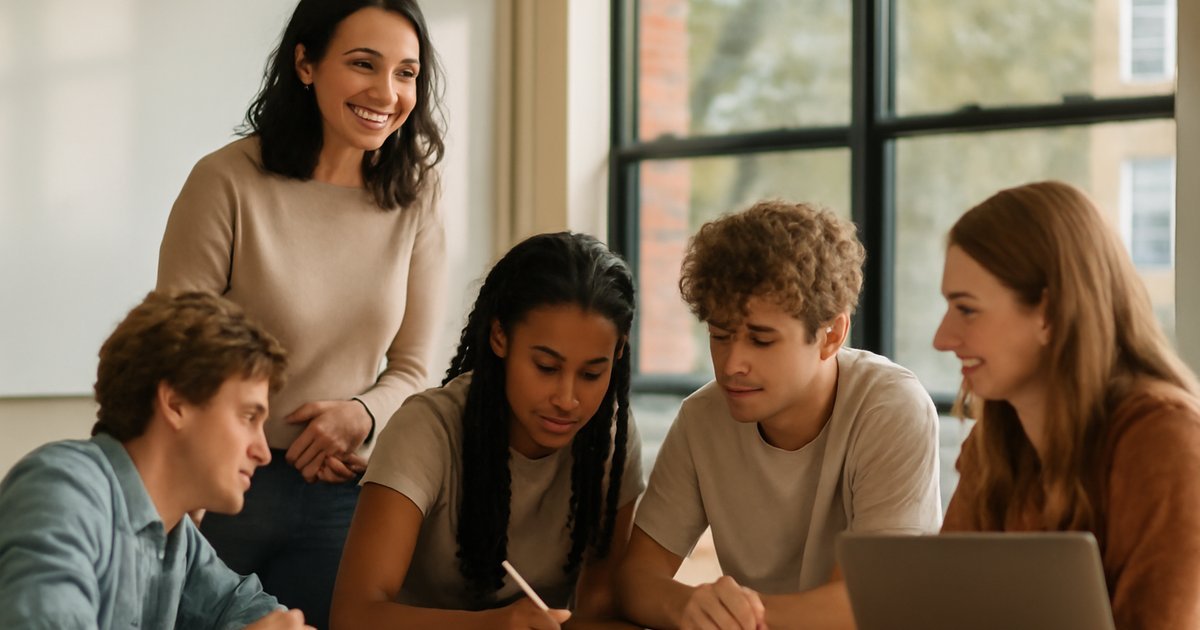
Imagine walking into class and, instead of sitting through a lecture, you jump straight into solving real problems with your teacher right beside you — that’s the power of the flipped classroom model.
Introduction
Picture this: a high school teacher named Mr. Torres used to spend most of his class time lecturing, only to watch students struggle silently with homework that night — alone, confused, and without support. After switching to the flipped classroom model, he noticed something remarkable. Students came to class having already engaged with the content, and he could spend every minute of class time on what actually mattered — answering questions, guiding discussions, and helping students who needed it most.
The flipped classroom model isn’t a passing trend. It’s a research-backed instructional approach that redefines when and how students engage with new material. Instead of absorbing lectures in class and doing practice at home, students learn foundational content through videos or readings before class — then use classroom time for deeper application, collaboration, and critical thinking.
In this guide, you’ll learn exactly what the flipped classroom model is, why it’s gaining traction in 2026, how to implement it step by step, and what mistakes to avoid along the way. Whether you’re a teacher ready to try something new or a student curious about how this model works, this article has what you need.
Why the Flipped Classroom Model Matters in 2026
Education has changed dramatically over the past decade. With AI-powered learning tools, short-form video content, and asynchronous learning now part of everyday student life, the traditional lecture model is increasingly misaligned with how today’s learners actually absorb information.
According to the National Center for Education Statistics (NCES), student engagement remains one of the top challenges facing K-12 and higher education institutions in the US. Passive lecture-based instruction is frequently cited as a contributor to low retention and disengagement — particularly among students from underserved communities who may lack access to academic support outside the classroom.
The flipped classroom directly addresses this problem. By moving content delivery outside of class, teachers free up valuable in-person time for the activities that benefit most from face-to-face interaction: guided practice, peer collaboration, Socratic discussion, and personalized feedback.
Research from the Journal of Educational Psychology found that students in flipped classrooms outperformed peers in traditional settings on measures of academic achievement and self-reported motivation. The model also aligns naturally with the growing popularity of self-paced learning strategies, allowing students to pause, rewind, and review pre-class content as many times as they need.
In 2026, as hybrid and online learning continue to shape US education at every level, the flipped classroom model is no longer an experiment — it’s a practical, proven strategy for educators who want to make every minute of class time count.
Understanding the Basics: What the Flipped Classroom Really Is
Despite growing adoption, there are still widespread misconceptions about what the flipped classroom actually involves. Let’s clear those up before going any further.
Misconception #1: It’s just assigning videos for homework.
This is the most common misunderstanding. Simply telling students to watch a video at home is not flipped learning. True flipped instruction involves intentional design — the pre-class content must be purposefully created or curated, and the in-class time must be restructured around active learning and application.
Misconception #2: It reduces the teacher’s role.
In reality, the flipped model increases the teacher’s impact. Instead of standing at the board for 45 minutes, teachers become coaches and facilitators during class time — circulating the room, asking probing questions, and providing targeted support exactly where each student needs it.
Misconception #3: It only works in tech-heavy classrooms.
While video content plays a central role, flipped learning can be implemented at various levels of technology. Even recorded voice narrations over slide decks, printed reading packets, or podcasts can serve as effective pre-class learning materials.
The model was popularized by educators Jonathan Bergmann and Aaron Sams in the late 2000s and has since been adopted across subjects from middle school math to college-level biology. A 2023 meta-analysis published by the American Educational Research Association reviewed over 100 studies and found consistent positive effects on student performance, especially in STEM subjects.
Understanding this distinction — between surface-level implementation and true flipped learning — is what separates teachers who see real results from those who feel frustrated after a few weeks.
Step-by-Step Guide: How to Implement the Flipped Classroom Model
Ready to flip your classroom? Here’s a practical, beginner-friendly approach to getting started — with options for those who want to go deeper.
- Start with one unit or one topic.
Don’t try to flip your entire curriculum at once. Choose a unit where students traditionally struggle with homework or where you feel classroom time is wasted on lecture. A single chapter or two-week unit is a manageable starting point. - Create or curate pre-class content.
You don’t need to produce Hollywood-quality videos. Tools like Loom, Screencastify, or even built-in phone cameras let you record clear, concise instructional videos in 8-15 minutes. Alternatively, curate existing content from Khan Academy or MIT OpenCourseWare — both offer high-quality, free instructional videos across dozens of subjects. - Add an accountability check.
Students are far more likely to complete pre-class content if there’s a low-stakes accountability measure. A short Google Form quiz, a reflection prompt, or a brief entry ticket at the start of class works well. This also helps you identify who came prepared and who needs additional support. - Redesign your in-class time intentionally.
This is the most critical step. Plan active learning activities that require students to apply, analyze, or create — not just recall. Options include problem-solving challenges, peer teaching, case studies, lab work, Socratic seminars, or collaborative project work. Tools like Google Classroom, Nearpod, or Pear Deck can help facilitate interactive in-class sessions. - Build in differentiation during class time.
One of the greatest advantages of the flipped model is that teachers can use in-class time to work with small groups. While some students work independently or in pairs on application tasks, you can pull aside students who struggled with the pre-class content for targeted reteaching. For more strategies on meeting diverse learner needs, see our guide on differentiated instruction. - Collect feedback and iterate.
After your first flipped unit, ask students for honest input. What worked? What was confusing? Were the videos too long? Did they feel supported during class? Use this feedback to refine your approach before expanding to more units.
For intermediate and advanced implementers, consider creating a flipped learning sequence that builds across an entire semester, with increasing levels of student autonomy as learners become comfortable with the model.
Common Mistakes to Avoid When Flipping Your Classroom
Even well-intentioned educators run into roadblocks when implementing the flipped classroom model. Here are the most common mistakes — and exactly how to avoid them.
Mistake #1: Making pre-class videos too long.
Students lose focus rapidly with passive video content. Research suggests attention begins to drop after 6 minutes for video-based learning. Keep instructional videos between 6-12 minutes, break complex topics into multiple shorter clips, and use visual cues, annotations, or chapter markers to aid navigation.
Mistake #2: Failing to account for the homework gap.
Not every student has reliable internet access at home. According to the Pew Research Center, as of the mid-2020s, millions of US students still faced inconsistent home internet access — a challenge sometimes called the "homework gap." Address this by offering downloadable video files, printed reading alternatives, or school library access before and after school for students who need it.
Mistake #3: Keeping class activities too passive.
Some teachers flip the delivery of content but forget to flip the design of class time. If students are still just listening during class — to peer presentations, teacher commentary, or group reports — the model isn’t working as intended. In-class activities must require active cognitive engagement: creating, evaluating, applying, or synthesizing information.
Mistake #4: Not communicating the model to parents and students.
When students and parents don’t understand why the class structure has changed, confusion and resistance are likely. Spend time at the beginning of the semester explaining the rationale behind the flipped approach. Share the research, set clear expectations, and invite questions. Transparency builds trust.
Mistake #5: Abandoning the model after one rough week.
The flipped classroom requires an adjustment period — for both teachers and students. Most educators report that the first two to three weeks involve a learning curve. Stick with it, keep gathering feedback, and make small adjustments rather than abandoning the model entirely.
Tools and Resources Worth Using
The right tools can make the flipped classroom model dramatically easier to implement. Here are some of the most effective options available in 2026, with honest assessments of each.
Edpuzzle (Free and paid tiers available)
One of the best tools for flipped learning, Edpuzzle lets you embed questions directly into videos — including YouTube videos or your own recordings. Students can’t skip ahead without answering, which builds accountability. Detailed analytics show you who watched, who skipped, and how students answered each embedded question. Free plan covers most individual teacher needs.
Loom (Free for educators)
Loom makes recording instructional videos simple and fast. You can record your screen, your face, or both simultaneously. Videos are instantly hosted and shareable via link. It integrates easily with Google Classroom and other LMS platforms. The educator account is free with verified school email.
Khan Academy (Free)
For math, science, humanities, and test prep, Khan Academy provides thousands of high-quality instructional videos and practice sets. It’s an excellent source of pre-class content without requiring you to create videos from scratch. Particularly strong for K-12 subjects.
Google Classroom (Free for schools)
The most widely used LMS in US K-12 education, Google Classroom is ideal for organizing flipped learning materials — posting videos, collecting accountability check responses, and distributing in-class resources. Its familiarity also reduces the learning curve for students.
Nearpod and Pear Deck (Freemium)
Both platforms transform static slides into interactive in-class experiences — exactly what you need for active learning during flipped class time. Features include live polls, collaborative boards, drawing tools, and real-time teacher monitoring. Free tiers are functional; paid plans unlock advanced features. For a broader look at what’s available, see our roundup of best EdTech tools for students in 2026.
Screencastify (Freemium)
A Chrome extension that records screen, webcam, or both. Great for quick instructional videos with minimal setup. The free plan allows up to 30-minute recordings, which is more than enough for flipped content. Integrates directly with Google Drive.
Frequently Asked Questions
Q: How do I handle students who don’t watch the pre-class videos?
This is the most common concern among educators new to the flipped model. Start with low-stakes accountability measures like brief entry tickets or reflection prompts at the beginning of class. For students who consistently come unprepared, have a brief conversation to identify barriers — whether it’s lack of internet access, time constraints, or lack of motivation — and address each individually. Building a class culture that values preparation takes time but is achievable.
Q: Does the flipped classroom work for all grade levels and subjects?
Research supports its effectiveness across a wide range of subjects and grade levels, from middle school through higher education. It tends to be especially effective in STEM subjects, language arts, and social studies. For very young learners (K-2), the model requires significant adaptation and may be less appropriate given developmental stages. In early childhood settings, in-class exploration often remains the primary mode of instruction.
Q: How much time does it take to create flipped content?
The initial investment can feel significant, but it pays off over time. Most educators report spending 2-4 hours creating their first few videos, with that time dropping to 30-60 minutes per video as they become more comfortable. Using existing content from platforms like Khan Academy or MIT OpenCourseWare can dramatically reduce preparation time, especially when you’re starting out.
Q: What if students find the videos too easy or too hard?
This is where differentiation becomes valuable. Consider creating tiered content — a foundational video for students who need review and an extension video for students who want to go deeper. Embedding comprehension checks in Edpuzzle also helps you identify students who need additional scaffolding before class time begins.
Q: Can the flipped model work in online or hybrid classrooms?
Absolutely — in fact, many argue the flipped model is even more effective in online settings. When synchronous class time is limited and precious, moving content delivery to asynchronous formats preserves live interaction for discussion, collaboration, and Q&A. Platforms like Zoom, Google Meet, and Canvas support flipped learning well in hybrid and remote environments.
Conclusion
The flipped classroom model is one of the most practical and research-supported shifts an educator can make — but like any meaningful change, it takes time, iteration, and a willingness to learn alongside your students.
You don’t need to flip everything at once. Start with a single unit, gather feedback, adjust your approach, and build from there. The teachers who see the most success with this model are the ones who treat it as a continuous improvement process — not a one-time switch.
Your next step? Choose one upcoming unit and identify the content you would normally lecture on in class. Ask yourself: could students engage with this material before class through a short video or reading? If the answer is yes, you’ve just found your starting point.
Progress in education rarely happens overnight — but with consistent effort and a student-centered mindset, the flipped classroom can genuinely transform how learning happens in your room.
The information in this article is for educational and informational purposes only. Academic requirements, program availability, and career outcomes vary by institution and individual circumstances. Always consult with a qualified academic advisor or career counselor for personalized guidance.
Content reviewed by our Editorial Team — writers and educators committed to delivering accurate, practical, and inspiring content for learners of all ages.